
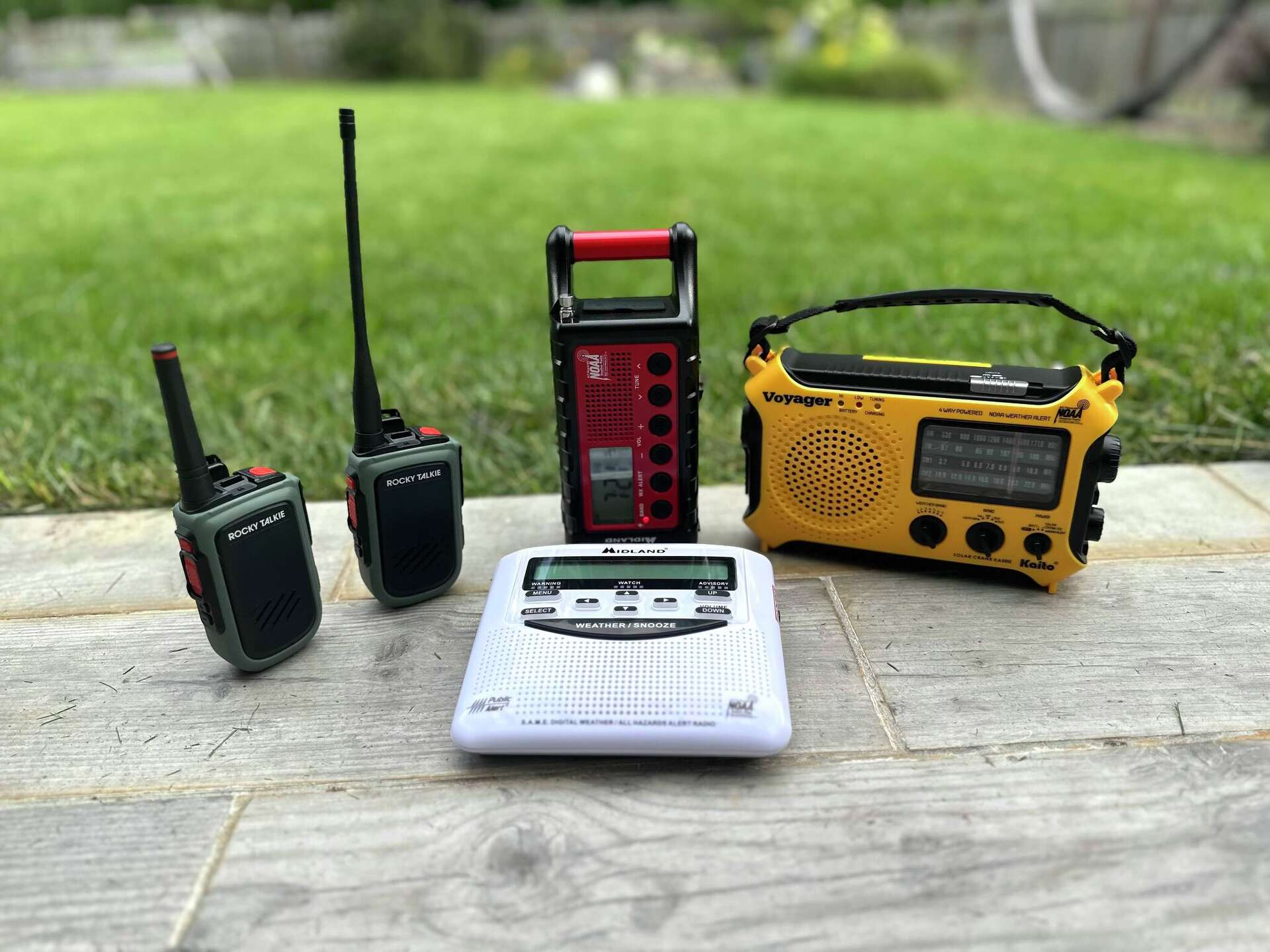
FRS vs GMRS vs MURS: The Complete 2026 Comparison Guide for Radio Users
If you’re trying to choose between FRS, GMRS, and MURS, you’re not alone. These three radio services dominate the consumer and prosumer communication space, but they differ dramatically in range, power, legal requirements, and real‑world performance. This guide breaks down everything you need to know — in plain English — so you can pick the right service for your needs.
Whether you’re preparing for emergencies, managing property, off‑roading, or just keeping in touch with family, understanding FRS vs GMRS vs MURS will help you make a smarter decision and avoid buying the wrong radios.
What Are FRS, GMRS, and MURS?
FRS (Family Radio Service)
FRS is the simplest of the three services. It’s license‑free, uses UHF frequencies, and is designed for short‑range communication. Most “bubble‑pack” radios sold at big box stores are FRS‑only, even if the packaging uses marketing terms like “up to 35 miles range.”
In reality, FRS is meant for casual, close‑range use: family trips, theme parks, neighborhood communication, and basic line‑of‑sight talking. You don’t need to worry about licensing, programming, or antennas — you just turn the radio on, pick a channel, and talk.
GMRS (General Mobile Radio Service)
GMRS is the more powerful sibling of FRS. It uses the same UHF band but allows higher power, detachable antennas, and repeaters. GMRS requires a $35 license that covers your entire family for 10 years, which is a very low barrier for the capability you gain. Don’t ignore the license requirement. Without a GMRS radio call sign, you’ll be ostracized from repeaters and you’re overall communications will be shunned. Not to mention you’re transmissions are illegal.
GMRS is popular with off‑roaders, emergency preparedness groups, rural communities, and families who want reliable communication over longer distances. If you’ve ever used a repeater to talk across a county, you’ve probably touched GMRS or ham radio.
MURS (Multi‑Use Radio Service)
MURS is a lesser‑known but extremely capable VHF service. It’s license‑free, allows external antennas, and performs exceptionally well in rural or wooded terrain. While it doesn’t get as much attention as GMRS, it quietly powers a lot of farm, ranch, and business communication.
Because MURS lives in the VHF band, it behaves differently than FRS and GMRS. It tends to handle foliage, hills, and uneven terrain better, making it a strong choice for people with property or land who don’t want to deal with licensing.
FRS vs GMRS vs MURS: Quick Comparison Table
| Feature | FRS | GMRS | MURS |
|---|---|---|---|
| License Required | No | Yes ($35/10 years) | No |
| Frequency Band | UHF | UHF | VHF |
| Max Power | 2W | Up to 50W | 2W |
| Repeaters Allowed | No | Yes | No |
| Detachable Antennas | No | Yes | Yes |
| Typical Range | 0.5–1 mile | 2–25+ miles | 1–5 miles |
| Best Use Case | Family comms | Serious comms | Property/farm use |
This table gives you a quick snapshot of FRS vs GMRS vs MURS, but the real story is how they behave in the field and how they fit into your actual life.
Range and Real‑World Performance
FRS Range: Short but Simple
FRS radios are intentionally limited. With fixed antennas and low power, they typically reach:
- 0.5–1 mile in neighborhoods with houses and trees
- 1–2 miles in open areas with good line of sight
- Less than 0.5 miles in dense forests or hilly terrain
If you’ve ever bought an FRS radio that claimed “up to 35 miles,” you’ve already discovered the catch: those numbers assume perfect conditions that almost never exist in real life. FRS is great for casual use, but it’s not the right choice if you need reliable communication over longer distances or in challenging terrain.
GMRS Range: The Clear Winner
GMRS is where real performance begins. With:
- Up to 50W mobile units
- High‑gain external antennas
- Full repeater support
- Better handheld performance than FRS
GMRS can easily reach 10–25+ miles when using repeaters or mobile units. Even handheld‑to‑handheld range is significantly better than FRS, especially if you use quality antennas and mount them properly.
For families, off‑road groups, and preparedness‑minded people, GMRS offers a sweet spot: more capability than FRS, less complexity than ham radio, and a license that’s cheap and easy to obtain.
MURS Range: Terrain Champion
Because MURS uses VHF, it handles foliage, hills, and uneven terrain better than UHF services. You can expect:
- 1–5 miles handheld‑to‑handheld in typical rural environments
- Strong performance through trees and vegetation
- Excellent coverage on farms, ranches, and large properties
MURS doesn’t have the same maximum power or repeater ecosystem as GMRS, but its VHF characteristics make it a quiet powerhouse for people who care more about terrain performance than raw wattage.
Equipment and Upgrade Paths
FRS Radios: What You See Is What You Get
FRS radios are simple, sealed units with:
- Fixed antennas you can’t upgrade
- No programming or advanced features
- No repeater support
- Basic consumer‑grade build quality
They’re easy to use and cheap to buy, but you’re locked into whatever performance the manufacturer gives you. For casual users, that’s fine. For serious communication, it’s limiting.
GMRS Radios: A System You Can Build Around
GMRS offers the widest equipment ecosystem:
- Handheld radios for portable use
- Mobile radios for vehicles
- Base stations for home or shop
- Repeaters to extend coverage
- Detachable antennas for tuning performance
- High‑power options for long‑range communication
This makes GMRS the most “buildable” service. You can start with a simple handheld and grow into a full system with repeaters, base stations, and carefully chosen antennas. If you enjoy tinkering and optimizing, GMRS is a great playground.
MURS Radios: Quiet Workhorses
MURS equipment is surprisingly flexible:
- Handheld radios for personal communication
- VHF base stations for property coverage
- Outdoor antennas mounted on buildings or poles
- Driveway alarms and gate sensors using MURS frequencies
- Business radios for commercial operations
MURS is widely used in agriculture and commercial settings, often behind the scenes. If you’ve seen wireless driveway alarms or gate alert systems, there’s a good chance they’re using MURS.
Licensing and Legal Considerations
FRS: No License, Minimal Rules
- No license required
- No age restrictions
- No repeaters allowed
- No detachable antennas allowed
- Channels shared with GMRS, but with lower power limits
FRS is designed to be as simple and accessible as possible. You don’t need to file paperwork or study for an exam — you just buy the radios and use them.
GMRS: License for More Capability
- License required ($35 for 10 years)
- License covers your entire family
- Repeaters allowed
- High‑power radios allowed
- Detachable antennas allowed
- More channels and flexibility than FRS
The GMRS license is easy to obtain online and doesn’t require a test. For many users, the extra capability is well worth the small cost and effort.
MURS: License‑Free but Structured
- No license required
- 5 VHF channels
- 2W max power
- External antennas allowed
- Business use allowed
- No repeaters
MURS sits in a sweet spot: more flexible than FRS, less regulated than GMRS, and very capable in the right environment. It’s especially attractive for property owners and small businesses.
Real‑World Use Cases
FRS Use Cases
FRS is ideal for:
- Hiking with family or friends
- Theme parks and events
- Neighborhood communication
- Kids learning radio basics
- Short‑range family use around a campsite
GMRS Use Cases
GMRS shines in:
- Off‑roading and trail groups
- Emergency preparedness and local nets
- Rural communication between homes and vehicles
- Neighborhood watch and community groups
- Family road trips with multiple vehicles
- Long‑range handheld communication using repeaters
MURS Use Cases
MURS excels in:
- Farms and ranches
- Driveway alarms and gate sensors
- Business operations on large properties
- Outdoor events and venues
- Rural property management without licensing
FRS vs GMRS vs MURS: Frequently Asked Questions
Which radio service has the best range?
GMRS offers the best range thanks to higher power, repeaters, and detachable antennas. In most real‑world scenarios, GMRS will outperform both FRS and MURS for long‑distance communication.
Do I need a license for GMRS?
Yes. GMRS requires a $35 license that covers your entire family for 10 years. There is no exam, and the process is handled online through the FCC.
Is MURS better than FRS?
In many rural and wooded environments, MURS performs better than FRS because it uses VHF frequencies. If you have property or land and want license‑free communication, MURS is often the better choice.
Can FRS radios talk to GMRS radios?
Yes, but only on shared channels, and FRS radios are limited to lower power and fixed antennas. GMRS radios may be capable of more, but they must still follow the rules when communicating with FRS users.
Do I need ham radio if I already have GMRS?
Not necessarily. GMRS covers a lot of everyday communication needs, especially for families and local groups. Ham radio adds more bands, more power, and more flexibility, but it also requires passing an exam and following additional rules. But it you want to consider ham radio as well, here’s my post designed to make it easy for you to get your Technician license.
Final Verdict: FRS vs GMRS vs MURS
If you want maximum capability without jumping into ham radio, GMRS is the clear winner. The combination of higher power, repeaters, and detachable antennas makes it the most versatile choice for families, groups, and preparedness‑minded users.
If you want license‑free flexibility with better terrain performance than FRS, MURS is the sleeper hit. It’s especially strong for farms, ranches, and rural properties where VHF shines and where you might also be running sensors or alarms.
If you want simplicity and you’re only using radios at short range, FRS is perfectly fine. Just don’t expect it to magically cover miles of rough terrain or replace a well‑planned GMRS or MURS setup.
Understanding FRS vs GMRS vs MURS isn’t just about specs — it’s about matching the right tool to the way you actually live and communicate. Pick the service that fits your environment, your people, and your goals, and your radios will feel a lot more like wizardry and a lot less like frustration.