
You just passed your amateur radio Technician license test and your call sign has been issued! Congratulations! That is a huge accomplishment.
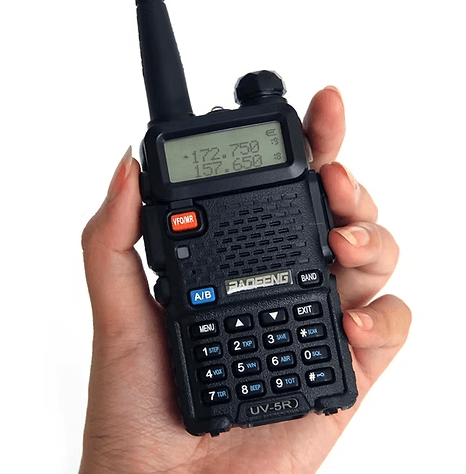
Then your first 2m/70cm handheld transceiver arrives in the mail. You unbox it, and there it is, that short, stubby rubber duck antenna. If you have spent five minutes on YouTube, you have already heard the advice: throw it away immediately. You need to jump down the aftermarket antenna rabbit hole. You need to spend more on a new handheld ham radio antenna than you paid for the radio itself.
Wrong, wrong, and wrong. Here is why most new hams do not need an upgrade on day one.
The Rubber Duck Antenna Myth
That little antenna that came with your radio is not useless. It was designed specifically for that radio to work on the 2 meter and 70 centimeter bands. It is a compromise, yes. It is short, flexible, and not a high gain antenna. But compromise does not mean broken.
Way too many new hams are victims of antenna hype that runs rampant on social media, especially on YouTube. Well over half of what you see about aftermarket VHF/UHF antennas for handheld transceivers is exaggerated. A 5 watt handheld will not suddenly become a 50 watt mobile rig because you put a 15 inch whip on it.
Why all the misinformation? It is mostly economics. There is a cottage industry designed to take advantage of new hams. Views, affiliate links, and antenna sales drive a lot of content. Big claims like “triples your range!” get clicks, but they rarely hold up in real world testing with a handheld ham radio antenna.
Scenario 1: You Live in a City or Suburb – Your Stock Antenna is Fine
If you live in a large, highly populated area, you will almost certainly start your ham career on local repeaters. That is what the Technician license is built for.
For repeater use at close to medium range, the stock antenna that came with your radio will do the job just fine. Full stop. Repeaters are usually on tall buildings, towers, or mountains and have excellent receivers. They are designed to hear weak handhelds.
You do not need to buy a $30 antenna to screw onto your $19 Baofeng UV-5R that you just bought. Save your money. Learn how to program your radio, learn repeater etiquette, and learn where your local repeaters are. Height and location will improve your signal far more than any handheld ham radio antenna swap. Simply stepping outside or standing near a window often beats any antenna upgrade.
Scenario 2: You Live in a Rural Area or You Travel a Lot
This is the one exception, and I know it well because I live in a very rural area. The closest repeaters to me are 20 miles away, and the ones I actually want to use regularly are 65 miles away. In that situation, the stock rubber duck struggles.
When you are trying to hit a distant repeater from a valley, inside a vehicle, or through trees, a longer antenna can help. The extra length gives you a bit more gain and gets the radiating element higher and away from your hand and body.
After testing a slew of longer, so called high performance antennas that promised the world, I settled on one that simply works without costing a fortune: the Nagoya NA-771. It is a 15.6 inch dual band whip that is flexible, well built, and consistently tests better than stock on both VHF and UHF. It does not cost an arm and a leg, and you do not need to spend more.

If you live rural, travel in canyons, or use your radio inside a vehicle a lot, the 771 is the only upgrade most beginners should consider. For everyone else, stick with stock for now.
What Actually Improves Your Signal More Than a Handheld Ham Radio Antenna
If you are struggling to hit a repeater, try this before you buy:
- Get high and get outside. Even 10 feet of elevation can matter more than 3dB of antenna gain.
- Improve your location. Move away from metal buildings, computers, and LED lights that create RF noise.
- Learn to roll up a quarter wave ground plane. A simple wire antenna you can hang in a tree for $5 will outperform any rubber duck style handheld ham radio antenna.
- Check your programming. 90 percent of “my antenna is bad” problems are actually wrong offset, tone, or frequency.
The Bottom Line: Forget The Hype
The amateur radio hobby is supposed to be about learning, experimenting, and community, not about draining your wallet on day one. The cottage industry around aftermarket antennas thrives on making new hams feel like their gear is inadequate.
It is not.
If you are in town and near repeaters, you will get along great with the stubby antenna that came in the box. If you are rural, remote, or mobile, get a Nagoya NA-771 and be done. Do not get caught up in old wives tales about magic antennas that turn a 5 watt handheld into a long range powerhouse. Physics still applies.
Use your radio, make contacts, and learn what you actually need. Your wallet will thank you.
P.S. Prospective Hams! Need help getting your license. My blog post here will help you get started! And remember…the American Radio Relay League (ARRL) is a wonderful treasure trove of information for new hams.