
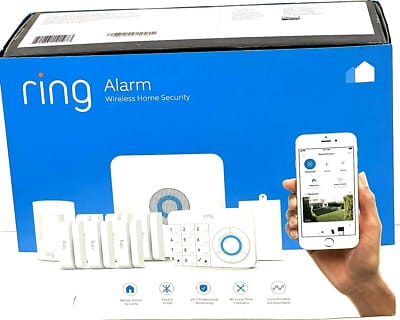
Does the Ring Alarm System Use Wi-Fi or Z-Wave? The Answer Surprises Most People
If you just bought a Ring Alarm System kit, you probably assume everything connects to your Wi-Fi. You are not alone. One of the biggest misconceptions in smart home security is that all Ring devices run on Wi-Fi. The reality is different, and understanding it will save you hours of troubleshooting.
The truth is this: Ring Alarm Z-Wave devices do not use Wi-Fi at all. The core security devices that protect your doors, windows, and motion zones use the Z-Wave protocol to talk to the Base Station. Your cameras and video doorbells are a completely different story.
What Is Ring Alarm Z-Wave and Why Ring Uses It?
Z-Wave is a low-power wireless communication protocol designed specifically for smart home devices. According to Ring’s own technical specifications, all Ring Alarm devices use specific Z-Wave frequencies associated with their region and are not intended to be used outside of that region. In the US and Canada, that means 908 MHz and 916 MHz frequencies.
Ring states it clearly in its support documentation: Z-Wave is a wireless communication protocol that your Ring Alarm devices use to speak to the Base Station.
So which devices are we talking about? Your actual Ring Alarm security system includes:
- Ring Alarm Base Station
- Ring Alarm Contact Sensor for doors and windows
- Ring Alarm Motion Detector
- Ring Alarm Keypad and Keypad (2nd Gen)
- Ring Alarm Range Extender
- Ring Alarm Smoke and CO Listener, Flood and Freeze Sensor
None of these connect directly to your router. They create their own secure mesh network.
Why Not Just Use Wi-Fi?
Ring chose Z-Wave for three smart reasons. First, it does not interfere with your home Wi-Fi network, so your 【entity-Netflix¦canonical_name=Netflix】 streaming does not slow down your security system. Second, Z-Wave is a mesh network, meaning each powered device can repeat the signal to the next device, making the system incredibly reliable. Third, Z-Wave uses far less power, which is why that tiny battery in your contact sensor can last up to three years.
The Critical Bridge: How Your System Actually Gets Online
This is where the confusion starts. Because Ring Alarm devices communicate with each other via Z-Wave, the Base Station acts as a bridge between Z-Wave and Wi-Fi and allows your devices to communicate with the internet.
Think of the Base Station as a translator. Your sensors speak Z-Wave to the Base Station. The Base Station then translates that Z-Wave language into Wi-Fi or Ethernet to talk to the Ring app on your phone. If your internet goes down, your Z-Wave sensors still talk to the Base Station and the siren will still sound. That is a huge advantage over an all Wi-Fi system.
The Most Misunderstood Device: The Ring Alarm Range Extender Is Z-Wave Only
The popular Ring Alarm Range Extender is the perfect example of this confusion. Many customers buy it thinking it is a Wi-Fi extender for their cameras.
It is not. It is a Z-Wave only device.
The official tech specs confirm it: Connectivity is Z-Wave with a 250-foot range to Base Station, and it extends Z-Wave a further 250 feet. It listens for and repeats network communication between the Ring Alarm Base Station and other Ring Alarm end devices.
In simple terms, the Range Extender does nothing for your Ring Video Doorbell or Stick Up Cam. As one smart home resource explains it: The Ring Range Extender keeps your Ring devices connected to the Base Station if they are far away but is only compatible with devices apart from your Ring Alarm System because they use Z-Wave. So, the Ring Chime Pro works with your Ring cameras and doorbells that use Wi-Fi, while the Ring Range Extender works with your Ring alarm devices that use Z-Wave.
If your contact sensor in the detached garage keeps going offline, you need the Range Extender. If your backyard camera has poor video quality, you need the Chime Pro.
Why Ring Cameras and Video Doorbells Are NOT Classified as Security Devices
Here is the second part that surprises people. If you go to Ring.com and look at the product categories, you will see a clear separation. Ring, the company, does not classify its cameras and video doorbells as being security devices in the same category as Alarm.
On the website and in the Ring app, Alarm, Cameras, and Doorbells are three separate product lines. The security devices are the Alarm sensors that can trigger professional monitoring and dispatch police. Cameras and doorbells are classified as smart cameras that provide video surveillance, motion alerts, and two-way talk.
This is not just marketing. It affects how they work. Ring video doorbells and security cameras like the Spotlight Cam, Floodlight Cam, and Indoor Cam do indeed use Wi-Fi, not the Z-Wave protocol. They connect directly to your home Wi-Fi network, which is why they need a strong signal and why video quality depends on your internet speed.
They cannot connect to the Base Station via Z-Wave and they will not benefit from a Ring Range Extender.
Why This Distinction Matters for Your Home
Knowing the difference between Ring Alarm Z-Wave devices and Wi-Fi cameras changes how you set up and troubleshoot your home.
1. For better placement: Do not worry about Wi-Fi signal when placing contact sensors. Worry about Z-Wave distance to the Base Station. For cameras, it is the opposite.
2. For buying the right extender: Dead zones in your Alarm system? Buy the Ring Alarm Range Extender. Buffering video on your doorbell? Buy the Ring Chime Pro.
3. For security during outages: Your Ring Alarm Z-Wave sensors will continue to communicate with the Base Station on battery backup even if Wi-Fi is down. Your cameras will not work without Wi-Fi unless you have Ring Alarm Pro with built-in eero backup.
Stop thinking of Ring as one single Wi-Fi system. It is two powerful systems working together. Z-Wave provides the reliable, low-power security backbone. Wi-Fi provides the high-bandwidth video pipeline. Once you understand that, everything about your Ring setup makes much more sense.
My Honest Opinion
I’ve been a Ring user for years. Just knowing what Ring can and can not do is all that it takes to provide your home with a quality security system and a price that won’t break the bank. I highly recommend Ring.